
How Bruges is building a future-oriented air quality policy
Anyone walking through Bruges sees a historic city with a rich past. But between the facades and along the cobblestones, another wind is blowing today: one that was invisible, but is now becoming increasingly tangible. The air we breathe every day is literally given a voice in Bruges. Thanks to the LIFE CityTRAQ project, air quality is no longer an abstract concept, but a story of measuring, learning, and targeted action.
The city as a monitoring network
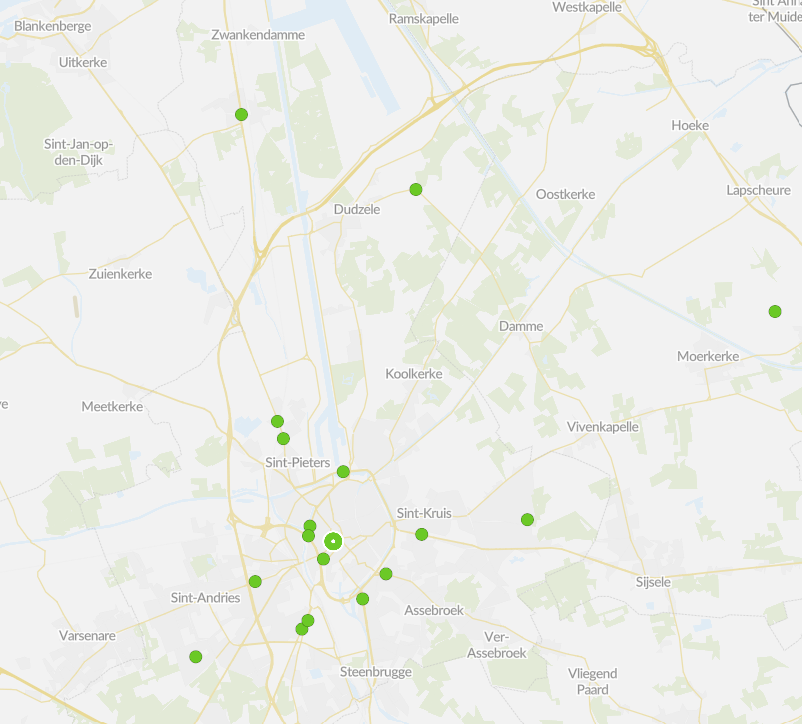
For the first time, Bruges established a fine-meshed urban monitoring network. Not isolated measurements, but a network of multiparameter sensors that collects data on various air pollutants. These sensors are distributed throughout the city: on lampposts, in busy traffic arteries, near residential areas, and in locations where the city is preparing mobility interventions. The sensors also had to be replaced multiple times: a testament to planning, teamwork, and engineering.
With this monitoring network, the city wanted to do more than just collect data. It is a tool to gain insight, to identify connections, and to substantiate policy. After all, healthy air begins with knowing where the problems are truly located.
Two tracks, one goal
Within LIFE CityTRAQ, Bruges opted for a dual approach.
On the one hand, the city worked on drafting a local air quality action plan. Bruges did not have one before, but wanted to lay a solid foundation for precisely that reason. Through an in-depth bottleneck analysis and detailed scenarios, it was investigated which measures are most relevant, feasible, and effective for maximum gains in terms of air quality.
On the other hand, Bruges invested in structural monitoring of air quality. In addition to data from the sensor network, proprietary measurements and reliable data from the Flemish Environment Agency were included. Specific tools developed within LIFE CityTRAQ helped to pinpoint bottlenecks and calculate scenarios.
Looking to the future
The local air quality action plan is not only a response to the current situation, but also a preparation for the future. The plan aligns Bruges with the new, stricter European air quality standards from 2030 and helps to set a course in time towards healthier air and greater liveability.
Following the approval of the action plan, the focus will initially be on the rollout of the selected measures. A substantive evaluation of their effect on air quality takes time and will only be possible several years after implementation. This, too, is an important insight: measurement and policy require patience, continuity, and follow-up.
Learning by doing
The project provided Bruges not only with insights into air quality, but also valuable lessons about monitoring itself.
Sensors are not yet plug-and-play today. Keeping a monitoring network operational requires technical expertise, sound maintenance, and a clear approach to failure. Strict quality requirements, good installation procedures, a reliable power supply, and robust equipment are important prerequisites. The support of experienced partners, such as the VMM, is necessary for this.
At the same time, LIFE CityTRAQ demonstrates how quickly these lessons can be applied to other cities and municipalities. By sharing knowledge, local authorities can get off to a stronger start, develop better tenders, and communicate more effectively with their residents.
Inspiration for other municipalities
The story of Bruges shows what becomes possible when measurement, analysis, and policy reinforce each other. A finely meshed sensor network, combined with local and supra-local data and smart analytical tools, offers in-depth insight into both short- and long-term developments. It makes bottlenecks visible, supports transparent and substantiated policy choices, and increases public support.
Keep measuring, keep learning
Even after LIFE CityTRAQ, Bruges remains committed to air quality monitoring. The city actively follows the evolution of measuring instruments and technologies and continues to learn through partners and available expertise. Because air quality is not an endpoint, but a process. Bruges demonstrates how data can help build the air of tomorrow, today.