LIFE CityTRAQ

Robot teaches children to consider air quality around school

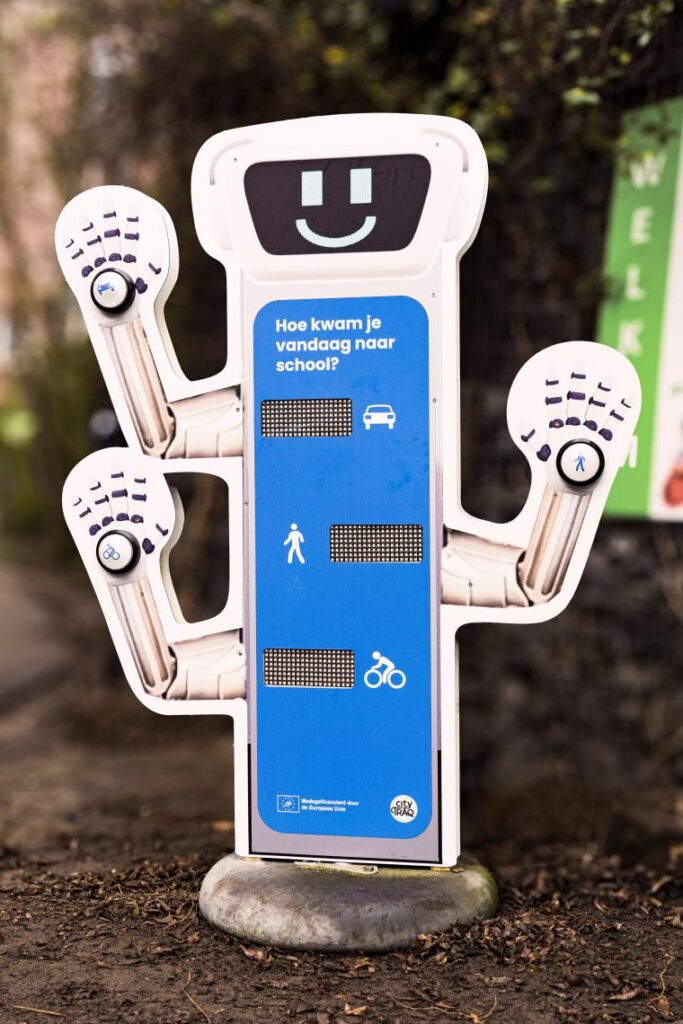
In January 2025, De Krekel primary school in Ghent welcomed a special new ‘pupil’: a robot at the school gate. QBOT was no ordinary robot, but a smart way to make children aware of air quality and sustainable mobility. The initiative is part of the LIFE CityTRAQ project, in which the City of Ghent is collaborating with VMM and IMEC.

Why this project?

The school is located in a busy traffic zone. Cars, buses, and trucks cause air pollution, which has an impact on children’s health.

“I don't think that air is very healthy, because we're close to a lot of traffic.”

How did it work?

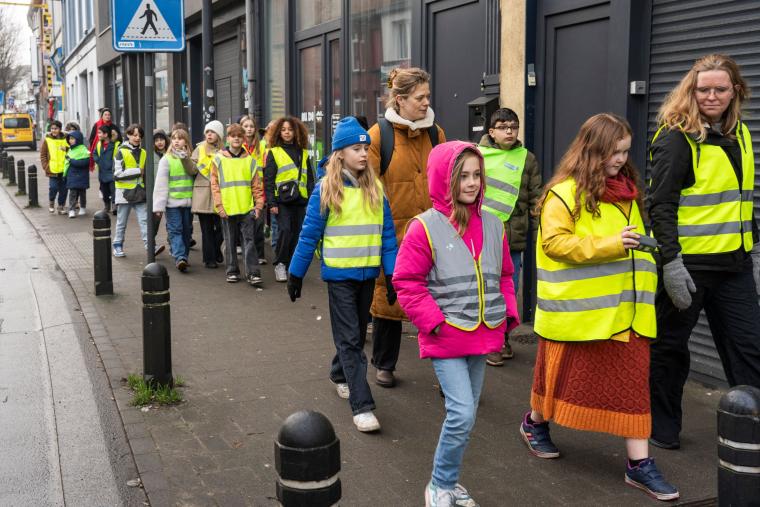
During rush hour, the street was transformed into a school street. Every morning, students could give the robot a high five to indicate how they got to school: on foot, by bike, or by car. Real-time air quality data appeared on a large screen. An interactive bicycle installation was also set up.

“You give the robot a high five to show how you get to school. Cycling or walking is better for the air than driving.”Kobe, Pupil De Krekel

QBOT
©Stad Gent

What else?

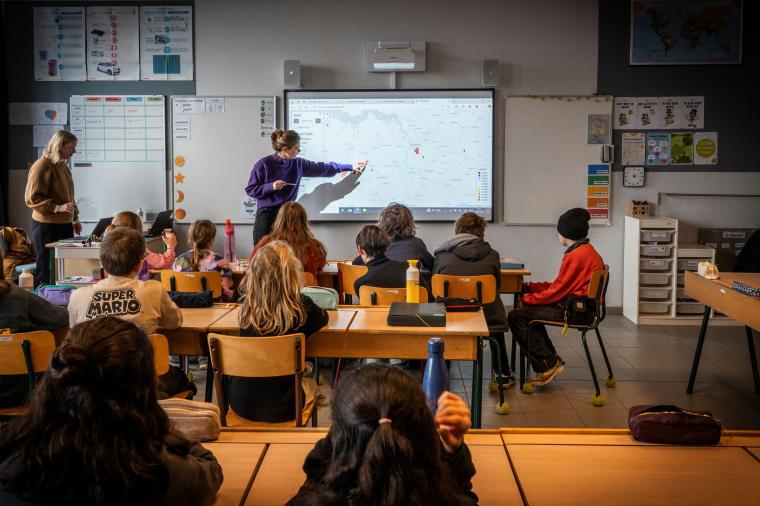
  • Students were taught about air quality and went on a field trip to take measurements using sensors.
  • The project was widely publicized via social media and the local press.
  • The data collected helps the City of Ghent and VMM to substantiate policy measures relating to school environments.
Lessen over lucht
©Stad Gent
Op meetuitstap
©Stad Gent

"There should be more cyclists and pedestrians, because car exhaust is bad for the air."

"It's better when it rains. And on sunny days, more people walk or cycle."

Results and insights

IMEC investigated the impact of the project. Interviews, observations, and data show that:

  • Safety is a more important argument for parents than air quality.
  • School streets receive broad support, including from motorists, despite the additional parking burden.
  • The information board mainly attracts people who are already interested in air quality.
  • Interactive installations such as the robot reach a wider audience, especially through children.
  • Parents receive information through their children, but visualization alone does not lead to major behavioral changes.
  • A slight shift from cars to bicycles was noticeable among children during the test period.

Tips to get started

  • Work together with schools, students, and data partners at an early stage.
  • Install interactive installations in visible, safe locations.
  • Use short, understandable messages and colorful animations.
  • Ensure that installations are robust and weatherproof.
  • Combine an information screen with interactive elements.